By Dr. Yasmin Fedda, January 2026
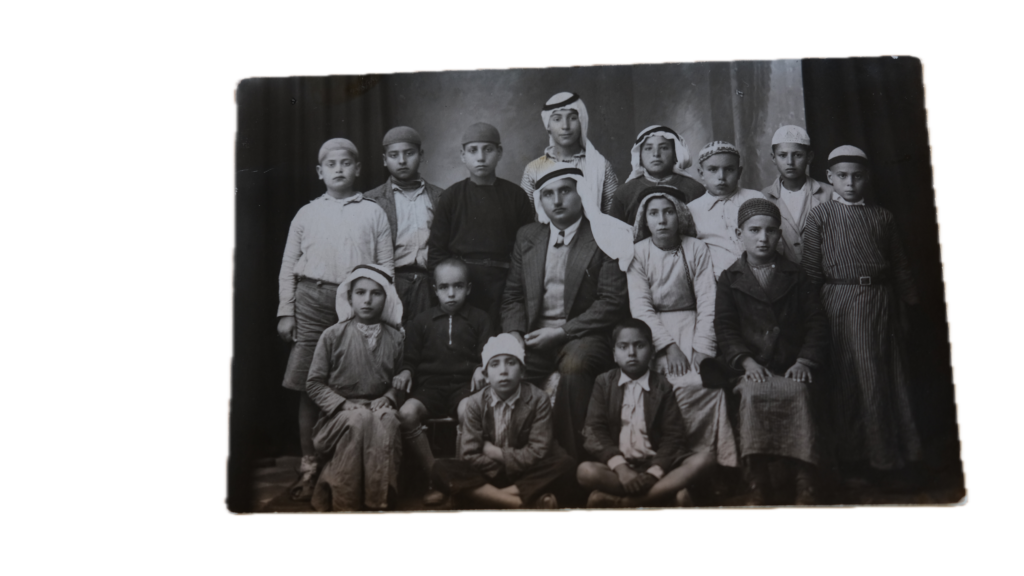
Image 1: Katbeh and the first group of students on the opening day of Deir Amr Farm School, 1941
We all inherit stories, impressions, and feelings from the past, and some stay with us until we confront them. My great‑grandfather, Abd Al Ghaffar, was principal of a well‑known orphanage in 1940s Palestine: the Deir Amr Farm School, west of Jerusalem. The school was created for children orphaned during the 1930s revolt against British rule. Many came from rural areas whose villages were targeted by British forces.
The school was established by the General Arab Orphan Committee of Palestine (Lajnat al‑Yatim al‑‘Arabiyya al‑‘Amma), headed by the educationalist Ahmad Samih al‑Khalidi and others. Their aim was to provide both academic and agricultural training so that children could one day return to their villages equipped to support and rebuild rural Palestine. Despite obstacles from British authorities at the start, they succeeded in creating a vibrant and ambitious project.
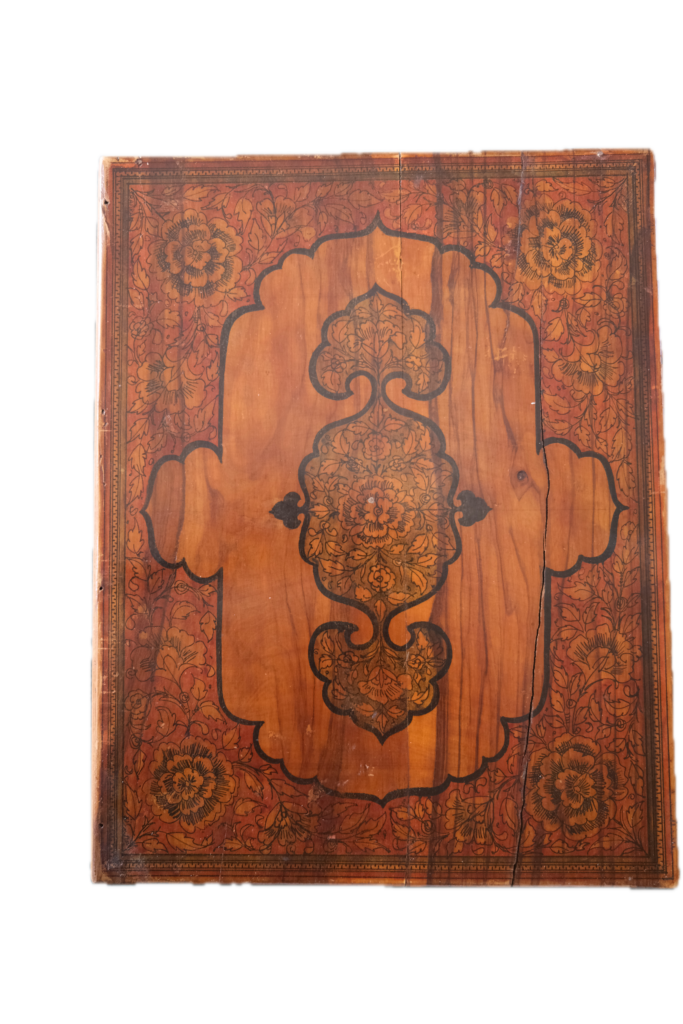

Images 2 & 3:The Dayr Amr visitor’s book and wooden box
When Abd Al Ghaffar was displaced in 1948, he managed to save the school’s visitors’ book. It was kept in a beautifully painted wooden box and leatherbound by the renowned Palestinian artist and calligrapher Jamal Badran. The cover carried the school’s emblem: a shovel, a plough, wheat, and a tree. One 1942 entry reads: “To make things grow; plants in the ground; ideas in the mind. Nothing is better than this.” Like so many messages from regional and international visitors, it resonates decades later.
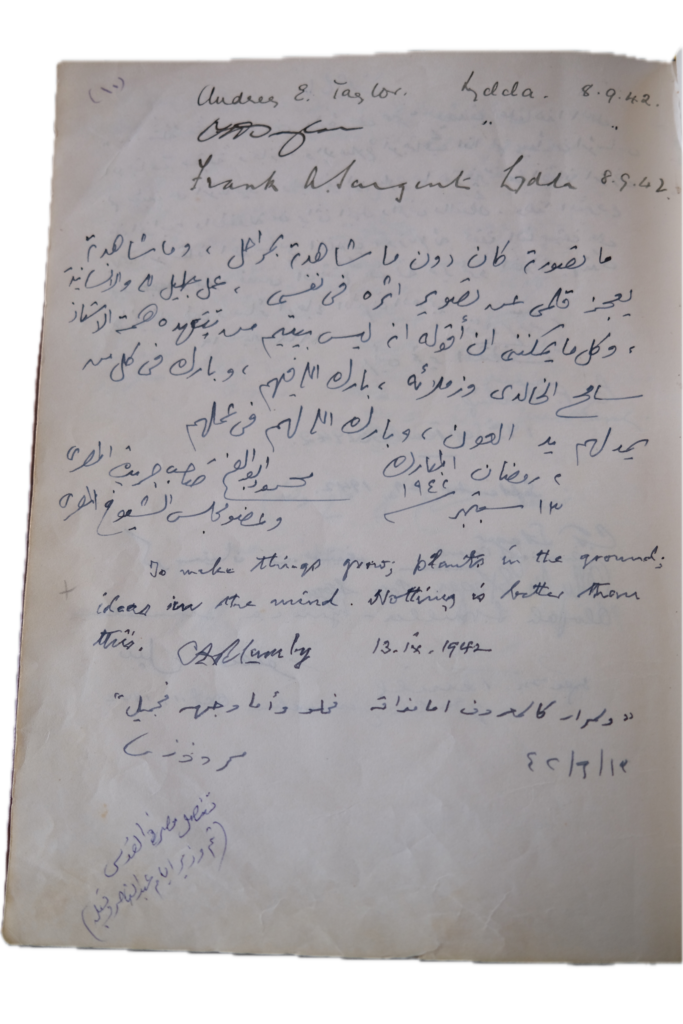
Image 4: A page from the Dayr Amr visitor’s book from 1942.
This comment became the spark for my research. With the PEF Research Grant, I began searching for photographs, films, and newspaper archives from the period, especially those relating to the school. I have since found press articles about the school and about my great‑grandfather. Deir Amr became widely known in Palestine and abroad; newspapers covered its progress regularly. The school even launched a nationwide crowdfunding effort—the “Sheep Campaign” (hamlet al‑kharouf)—in which villages donated the value of a sheep to support the institution instead of slaughtering one for guests.
One comment in the visitors’ book particularly intrigued me: “We hope that the several million people who see our film will gain a proper impression of the work we have photographed today. 20 June 1946.” I shared the image of this comment with the researcher I’m working with. After examining the signatures for several days, he located the film. Though much of the film was cynical about the situation in Palestine, it highlighted the farm school as a rare source of inspiration. In the footage I could see the children being taught, playing, and building works underway. It was being expanded at the time after another fundraising drive. There was a lot of energy in the footage and sense of hope despite the rising tensions at the time. In another film he found, my great grandfather is walking around, and teaching the children.
Abd Al Ghaffar had taught in several Palestinian schools before joining Deir Amr. As a civil servant in the Ministry of Education, he paid taxes and pension contributions under the British Mandate. After his displacement to Syria and subsequent retirement, he received his mandate pension at the British Embassy in Damascus. He always emphasised that it was Palestinians’ money, not Britain’s. Twenty years ago, I filmed him collecting his pension at the embassy. I felt that his presence—and the unresolved histories he carried—haunted the remnants of the empire. In parallel, the mechanisms of empire continue to haunt us. His pension is an entry point into exploring the enduring ties and entanglements between coloniser and colonised.
This research and film project is about the school and about Abd Al Ghaffar, but it also raises urgent questions for today. How can we construct new archival materials to sustain historical knowledge of Palestine? How do we trace the ghosts of empire through bureaucratic structures, and what might that reveal about the present? How should we educate children about the land they inhabit, especially in the face of climate breakdown? When land has been polluted by weaponry and war, how do we heal it? Palestine is now in crisis as never before, with an overwhelming number of new war orphans. As we search for solutions, what lessons can the past offer?
The project is ongoing. With the support of the PEF Research Grant, I have gathered images, documents, and new leads. The project has since received additional R&D funding from Chicken & Egg Films.
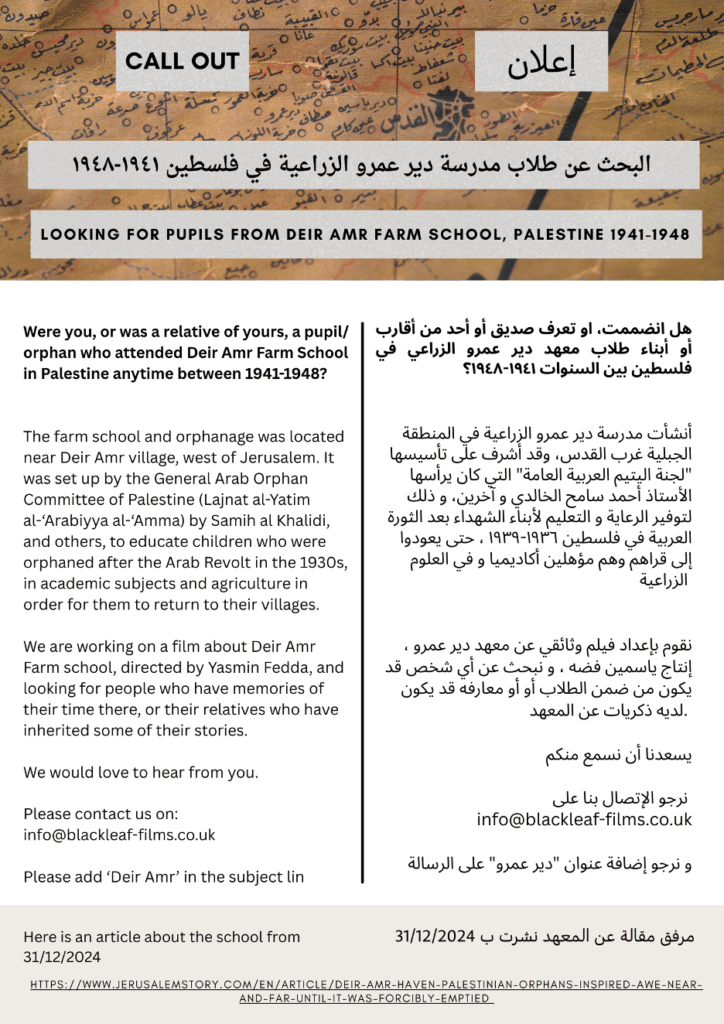
I am now trying to locate any former students of Deir Amr Farm School—or their descendants who may have inherited their stories.
If you know anyone who might know anyone, please share this call‑out.