By Loay Abu Alsaud
Department of Tourism and Archaeology,
An-Najah National University, Nablus, Palestine
www.najah.edu
Email: loayabualsaud@najah.edu
November 2025.
The Gaza Strip is often described in news headlines as a land under siege, a place of relentless conflict and humanitarian crises. Yet beneath these headlines lies another, less visible story: the story of a rich and vibrant cultural heritage, threatened by war but preserved through the courage and dedication of local communities. Museums, mosques, churches, archaeological sites, and centuries-old traditions make Gaza not just a political landscape but also a historical and cultural treasure. Protecting this heritage is not only about saving objects—it is about preserving memory, identity, and resilience.
The Threat to Cultural Heritage
Since October 2023, the recent war in Gaza has posed an unprecedented threat to the Strip’s cultural and historical sites. Airstrikes, artillery shelling, and systematic destruction have not spared archaeological sites, museums, or religious institutions. Mosques and churches were damaged or destroyed, and many of the city’s cultural landmarks faced massive and irreparable damage.
The campaign of destruction extended to public and municipal facilities, including schools libraries, and universities. All this alongside the destruction of homes, places of work, hospitals and shops. The cumulative effect ensures that displaced residents have little to return to.
Between October 7, 2023, and the present, the damage to Gaza’s cultural heritage has been extensively documented. At the time of writing (November 2025), according to official surveys, 138 archaeological and historical sites have been highly damaged, 61 sites moderately damaged, 27 sites lightly damaged, while 90 sites remain intact. These figures illustrate the scale of destruction and underscore the urgent need for both local and international intervention. This short blog takes a snapshot of a few of the institutions which have been affected, and some of the efforts to preserve what remains. We hope it will draw attention to the fact that even in the bleakest of times, there are people for whom the preservation of cultural heritage is a meaningful and necessary act.
Al-Qarara Cultural Museum: A Beacon of Memory
At the heart of Gaza’s heritage protection efforts stands the Al-Qarara Cultural Museum, founded in 2016 by visual artist Mohamed Abu Lahia. Located in the town of Al-Qarara, the museum spans 300 square meters and initially housed over 3,500 diverse artefacts, including archaeological items, traditional crafts, textiles, coins, and historical tools.
From its earliest days, the museum was a community effort. Young men and women joined Abu Lahia to create a space where local history could be preserved, studied, and shared. The museum became more than a repository of objects—it became a hub for cultural education and community pride.
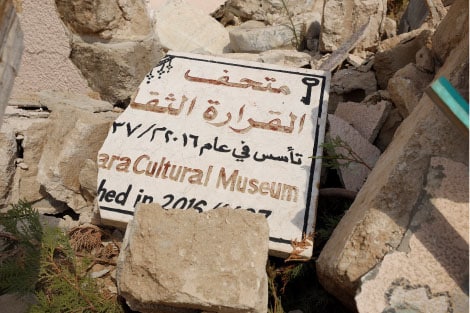
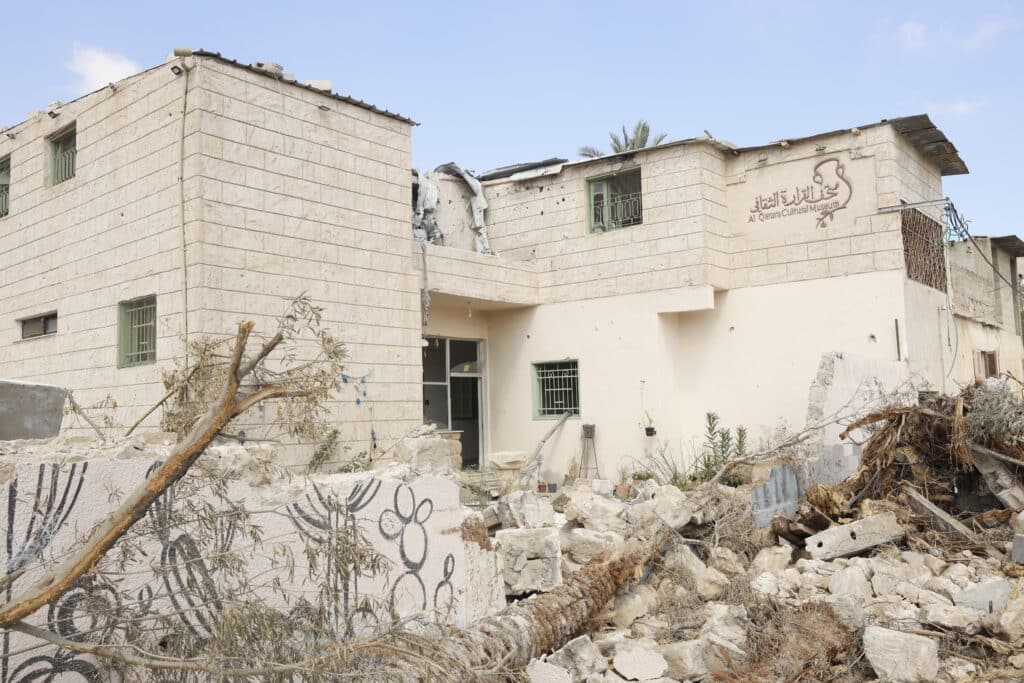
However, the museum itself was not spared during the recent war. By May 2024, the building was partially destroyed, while the adjoining ba’ika—a traditional arcade structure—was completely ruined. Recognizing the urgent need to protect the collections, Mayasem, the managing association, launched the project “Saving the Al-Qarara Cultural Museum” in partnership with the Palestinian Museum and with support from the ALIPH Foundation, the International Alliance for the Protection of Heritage in Conflict Areas.
Guardians of the Culture: Local Heroes
Central to these preservation efforts are organisations like the Mayasem Association and the Guardians of Culture. The Mayasem Association engages in cultural and heritage activity to help strengthen communities, provide safe spaces for children, and raise awareness of cultural heritage in Gaza. The Guardians of the Culture are a group of 17 dedicated young volunteers trained to rescue, document, and safeguard Gaza’s heritage. The team includes:
- Mohammad Akram Shehada Abu Lehia
- Najla Khaled Hassan Abu Nahla
- Tahani Yousef Ibrahim Ghiyad
- Muhannad Adnan Mahmoud Abu Wadi
- Ihab Akram Shehada Abu Lehia
- Waleed Tamim Yassin Abdelghafour
- Majd Rouhi Salem Al-Agha
- Etemad Hamouda Suleiman Abu Amra
- Osama Fouad Ahmidan Abu Lehia
- Yahya Waleed Fawzi Abu Deqa
- Mahmoud Ziad Abdelhamid Abdelghafour
- Hussein Alaa Khamees Samsom
- Shaimaa Mohammad Shaker Al-Natour
- Riham Nahid Ziad Al-Batta
- Taghreed Adel Mohammad Hejazi
- Malak Essam Mohammad Al-Bayouk
- Osama Mousa Jallhoum Jallhoum
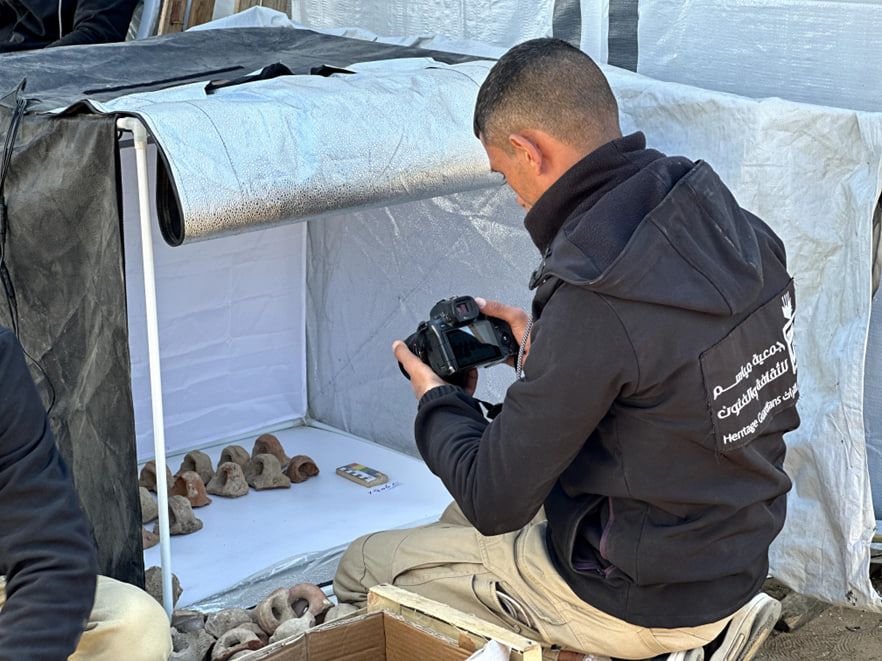
These volunteers have been at the forefront of rescue operations, moving thousands of artefacts to safe locations, carefully packing, cataloguing, and preserving them despite ongoing conflict. To date, the team has rescued over 4,300 items and documented four major museum collections, including the Al-Qarara Museum.
Protecting the Future
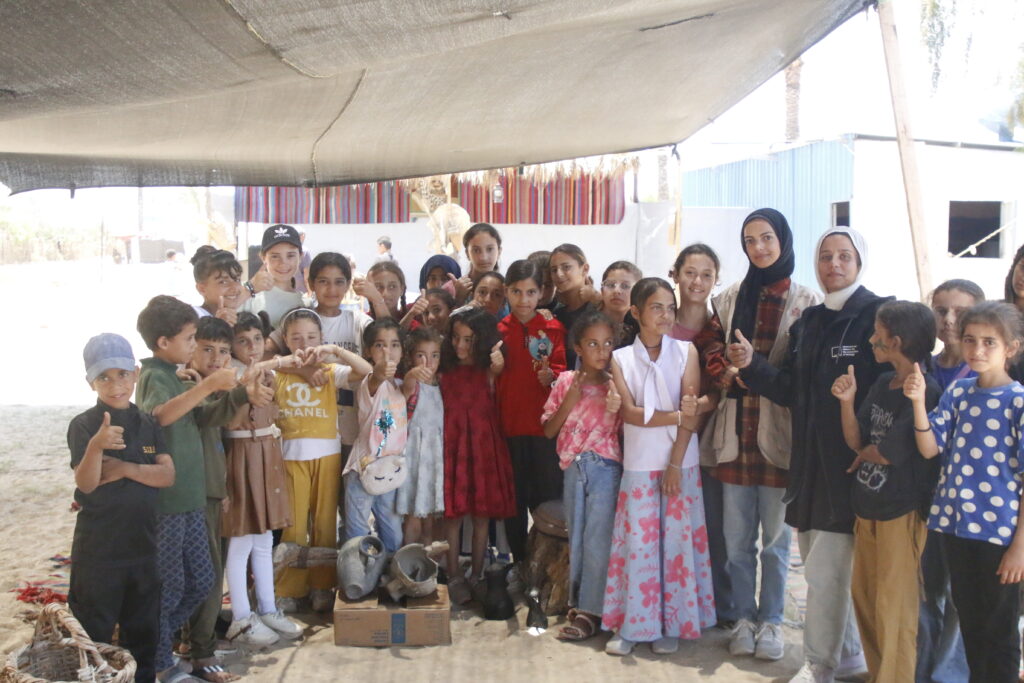
Beyond the immediate rescue, the Guardians of the Culture are deeply invested in education and community engagement. Programs like “The Little Archaeologist” train children—over 1,500 to date—to understand the importance of heritage, instilling a sense of responsibility for preserving Gaza’s cultural identity.
Even as the team faces logistical challenges, scarcity of conservation materials, and personal danger, their commitment remains unwavering. Each saved artefact is not just an object—it is a symbol of resilience, a link between past and future, and a statement that Gaza’s culture will not be erased.
International Support and Partnerships
The work of the Guardians is reinforced by collaboration with multiple institutions, including:
- The Ministry of Tourism and Antiquities of Palestine
- The Society for Palestinian Archaeology
- Riwaq – Centre for Architectural Conservation
- The Centre for Conservation of Cultural Heritage in Bethlehem
- UNESCO
- ALIPH Foundation
These partnerships provide technical support, funding, and recognition, highlighting the global importance of protecting Gaza’s cultural heritage.
The story of Gaza’s cultural heritage is one of both destruction and hope. While wars have inflicted immense damage—over 200 archaeological and historical sites affected—the courage and dedication of local staff, volunteers, and international partners demonstrate that heritage can survive even in the most challenging circumstances. The 17 members of the Guardians of the Culture team embody this spirit, showing that safeguarding the past is inseparable from protecting identity, memory, and community resilience.
Through their efforts, Gaza’s cultural heritage continues to live—not just in museums and artefacts but in the hearts and minds of its people, ensuring that future generations can connect with a history that is at once rich, resilient, and enduring.
Below is a photographic gallery showing the work of these schemes, and the tutours and volunteers who make it possible. The photographs have been taken by Waleed Abdul Ghafur, M. Abu Lahia, Mohammed Abu-Lehia, and Majd Al-Agha.
The Al-Qarara Cultural Museum, which has suffered extensive damage during the bombardment.
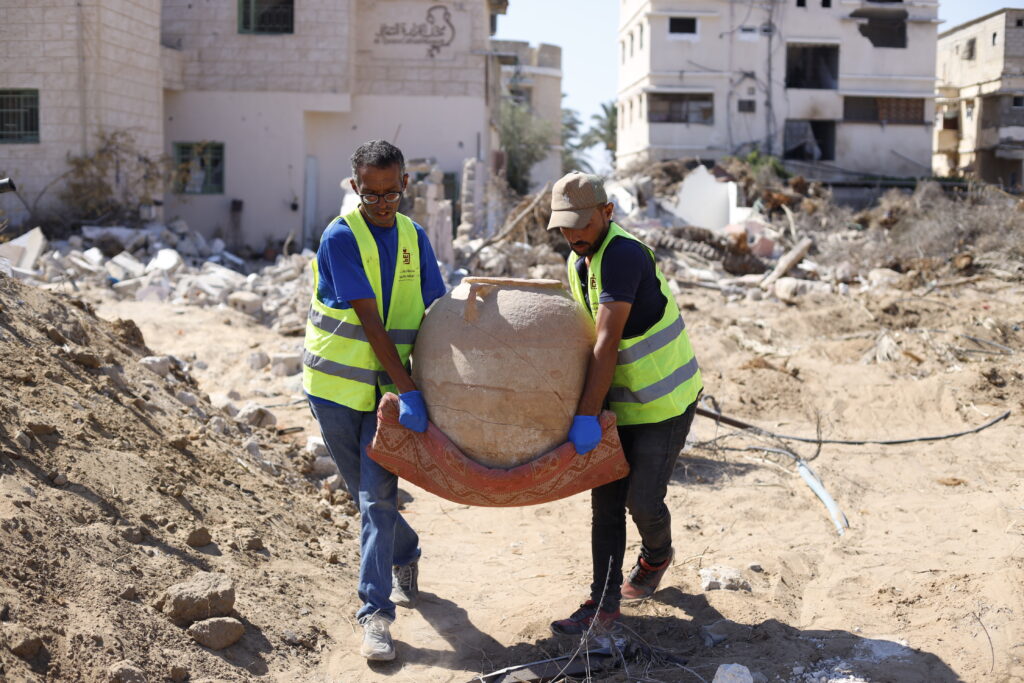
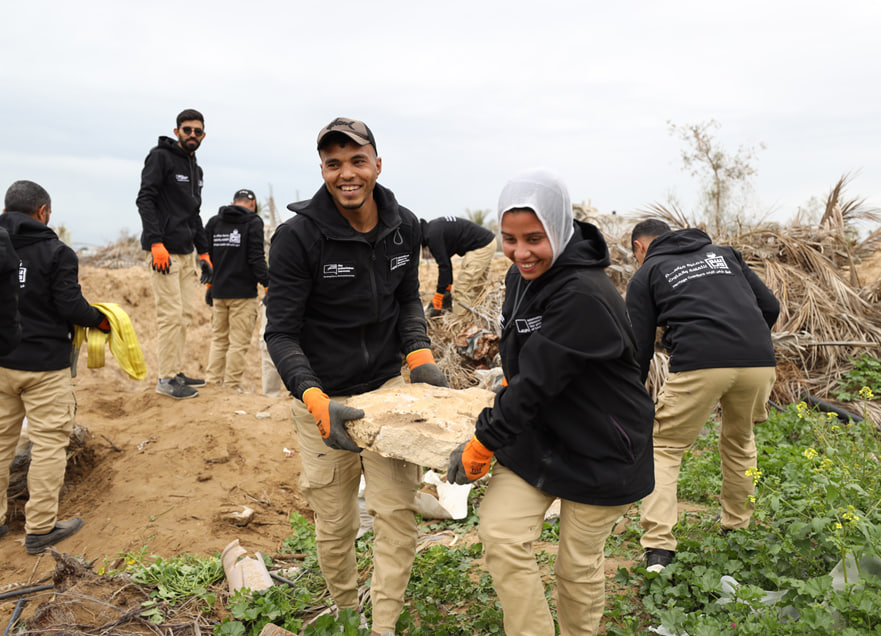
Salvaging architectural fragments and artefacts from the rubble.
Members of the Mayasem Association for Culture and Arts, together with local residents and the Guardians of Culture volunteers, work to rescue and secure archaeological artefacts from the Al-Qarara Cultural Museum, and from other threatened sites in Gaza. The volunteers, many of them young students, carefully wrap and transport fragile items—including pottery, marble fragments, and statues dating back to the Roman and Byzantine periods—to temporary shelters. Their actions form part of a wider community-led initiative to document, clean, and restore Gaza’s endangered heritage collections amid ongoing violence. Despite limited resources and constant danger, these local efforts reflect the determination of Gazans to preserve their cultural identity and protect their shared history for future generations.

The Staff of the Guardians of Culture team with the museum collection of Mr. Youssef Al-Astal – Al-Qarara town, 23 February 2025. From left to right: Mohammad Abu Lahia, Ihab Abu Lahia, Osama Abu Lahia, Osama Jalloum, Hussein Samsom, Muhannad Wadi, Yahya Abu Deqa, Mahmoud Abdel-Ghafour, Tahani Ghayyad, Majd Al-Agha, Malak Al-Bayouk, Reham Al-Batta, Etemad Abu Amra, Taghreed Hejazi, Sheima Al-Natoor.

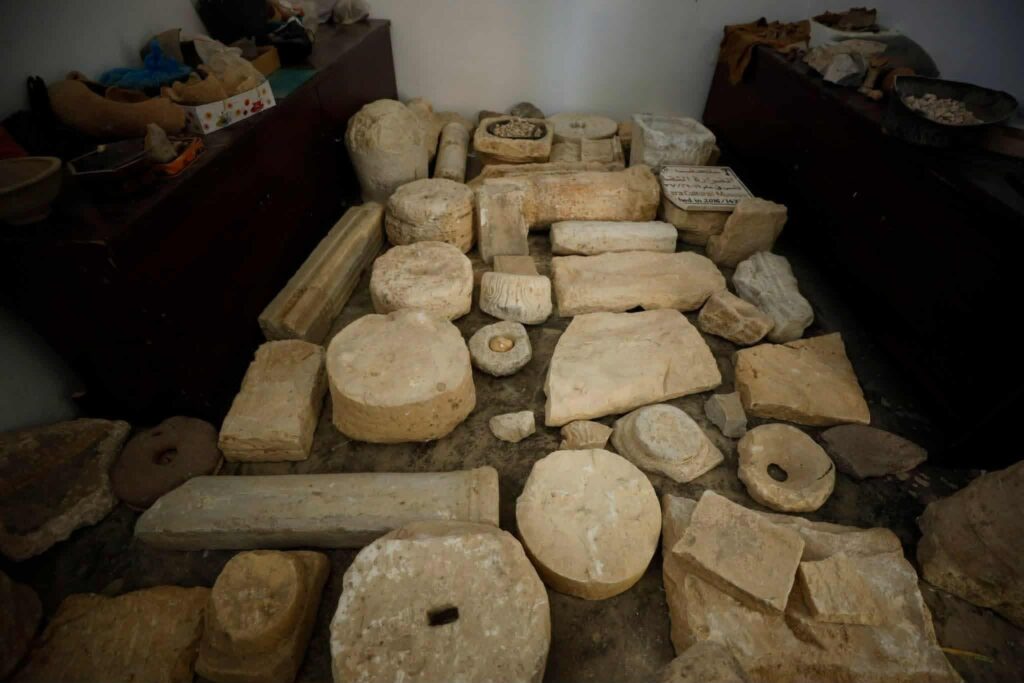
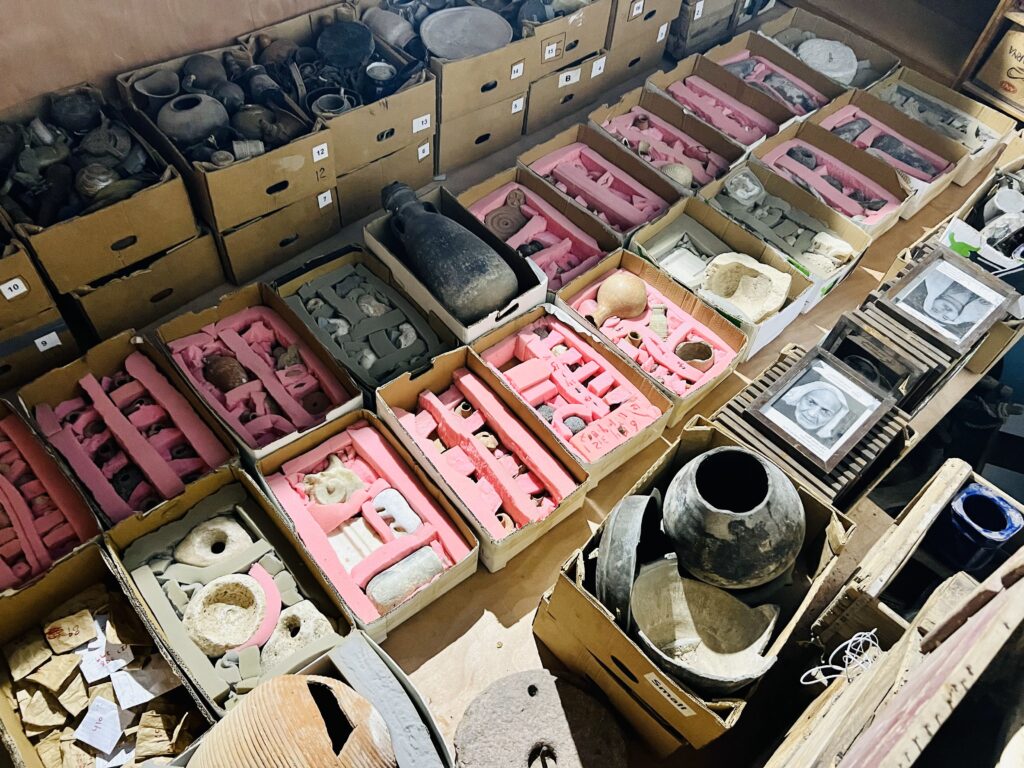
Architectural Fragments and small archaeological artefacts packed and moved to safe storage.
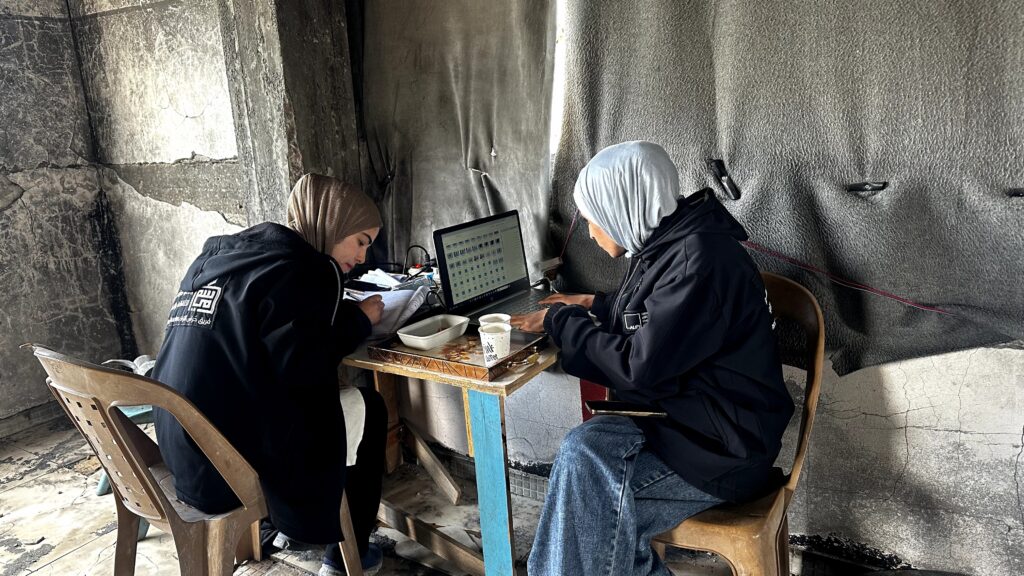
Volunteers documenting archaeological finds
The Work of the Mayasem Association: Children and Volunteers Protecting Gaza’s Cultural Heritage through The Little Archaeologist Project. Amid the ongoing war in the Gaza Strip, the Mayasem Association for Culture and Arts has become a beacon of resilience and hope. Despite the destruction surrounding them, a group of dedicated volunteers and children have joined hands to protect what remains of Gaza’s cultural heritage. Through workshops and community initiatives, the Association teaches children how to handle, clean, and document archaeological objects rescued from damaged museums and historic sites. These young participants not only learn the value of their cultural identity but also become active guardians of memory and history. Working side by side with local archaeologists and heritage specialists, the volunteers and children transform loss into learning and despair into action—proving that even in times of devastation, the love for heritage can unite generations and preserve the spirit of Gaza for the future.

Eatimad Abu Amra and Malak Al-Bayouk, and children participating in the “Little Archaeologist” training at Al-Baydar land – Al-Tina Street – Mawasi Al-Qarara. June 15, 2025.