

Alexander Wasse, Yeditepe University, Istanbul
Thanks to financial support from the Palestine Exploration Fund and with the gracious permission of the Department of Antiquities of Jordan, August-October 2025 saw the Desert Air Routes Project (the Project) continue its documentation of surviving physical infrastructure relating to the Mandate-period air routes which traversed the deserts of eastern Jordan and western Iraq between 1921 and 1948.
First established and operated by the Royal Air Force as a bare-bones air-mail link between Cairo and Baghdad, memorably described by Wing Commander Roderic Hill (1929) in his evocative The Baghdad Air Mail (Figure 1), the route was in late 1926 taken over as an ever-more-luxurious civilian passenger service by Imperial Airways – first flying landplanes between Cairo and Karachi (Figure 2), and latterly the iconic Empire-class flying boats on the London-Brisbane service, routing through India and Singapore (Figure 3). Owing to the featureless desert terrain between Amman and Hinaidi/Habbaniya, this part of the route was from the outset equipped with ground markers, including directional arrows and a ploughed furrow for pilots to follow, numbered emergency landing grounds at approximately 30km intervals, and an accompanying track.
The route saw considerable evolution in the early 1930s, when the somewhat irregular line originally established by the RAF was straightened out to create a non-stop, ‘great-circle’ route between Gaza and Rutbah. This was in part due to the introduction of more modern aircraft with greater range, but was also linked to the construction of the Iraq Petroleum Company (IPC) pipeline between Kirkuk and Haifa. A considerable length of the pipeline was in 1931-32 staked out along the straightened air route, this being a clear example of an integrated imperial-communications strategy involving both government and the private sector. A further fifteen emergency landing grounds were marked out at this time, along with directional arrows, and a new track was constructed (now the Baghdad highway). Upgraded navigational equipment, eventually including air beacons (‘desert lighthouses’), was also installed. These developments were part of a far-reaching upgrade to the air route across the wider Middle East region, which by way of example saw the establishment of a rest house-cum-fort and airfield at Sharjah, on the southern shore of the Arabian Gulf (Stanley Price 2012).
Although much of the infrastructure associated with these air routes has survived to the present day, it has not been systematically studied and is all too frequently at risk of destruction. The goals of the Project are to record what remains, to explore local engagement with and sentiment towards the air-route heritage, and to assess the lasting impact of these routes in Palestine/Israel, Jordan and Iraq. Whilst basic by modern standards, the technology employed on the routes was cutting edge – and expensive – for its time, allowing for comparative studies with early 20th-century air routes elsewhere in the world (e.g. the transcontinental US Air Mail service [Leary 1985; Lehrer 2014]).
Building on pilot work undertaken in 2024, the Project in 2025 all but completed its documentation of the eastern Jordanian part of the original 1921-26 route, as well as systematically recording infrastructure along approximately 250km of the upgraded 1932 route between Qasr al-Hallabat – roughly 25km east of the modern city of Zarqa – and the Iraqi border. The aforementioned development of and investment in the air routes over their period of use is clearly visible in the surviving infrastructure. This reflects rapid technological advances in aircraft design over the 1920s and 1930s, with higher operating altitudes necessitating larger and thus more visible ground markers. While the markers associated with the original 1921 route were typically little more than shallow bulldozer scrapes which needed frequent remarking (Figures 4 and 5), the 1932 route was equipped with large, permanent installations (Figures 6 and 7), typically of constructed of painted cement on rubble foundations and occasionally indicating the direction to either AMM(an) or RUT(bah) (Figure 8).
Although a great deal of work remains to be done – the Project hopes in due course to extend its work into Palestine/Israel and Iraq and especially to explore local-community engagement with the air-route heritage through oral history – we are delighted to have been able to make a start on documenting what remains. Although large, the air-route ground markers are shallow and thus vulnerable to damage from bulldozing, cultivation efforts and vehicle traffic. The desert air routes are not only a key element in the now-contested colonial history of the Middle East, but continue to exert a profound impact on communications, infrastructure and settlement patterns in eastern Jordan and western Iraq to this day.
Figures

Figure 1: The Officers’ Mess, somewhere on the original Cairo-Baghdad air-mail route established by the Royal Air Force, ca 1921 (Hill 1929: facing 250)
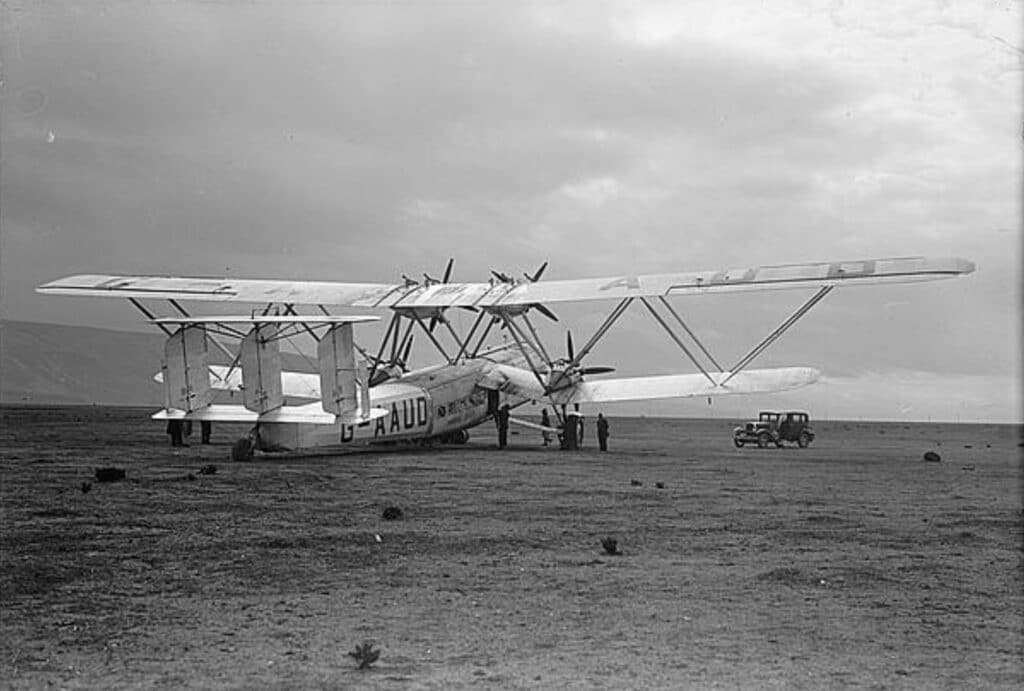
Figure 2: Handley Page H.P.42 Hanno at Semakh, Palestine in October 1931 (Library of Congress n.d.)

Figure 3: Short S.23 Empire flying boat Cavalier (Armstrong 1952: facing 141)
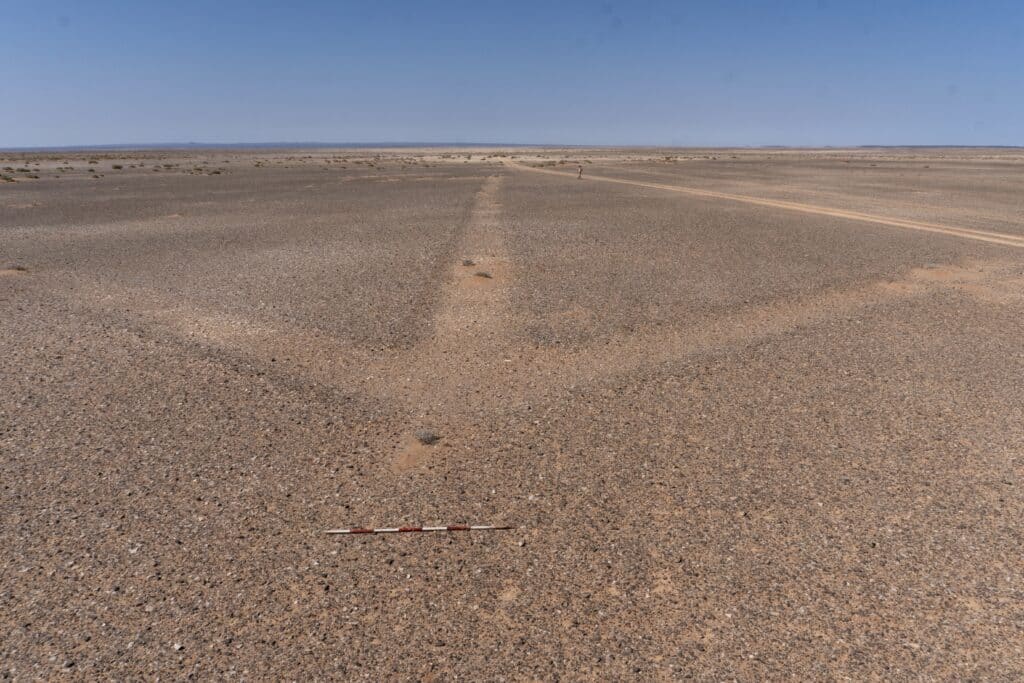
Figure 4: Shallow, double-headed arrow on original Cairo-Baghdad air-mail route established by the Royal Air Force, ca 1921 (photographer A.M.R. Wasse)
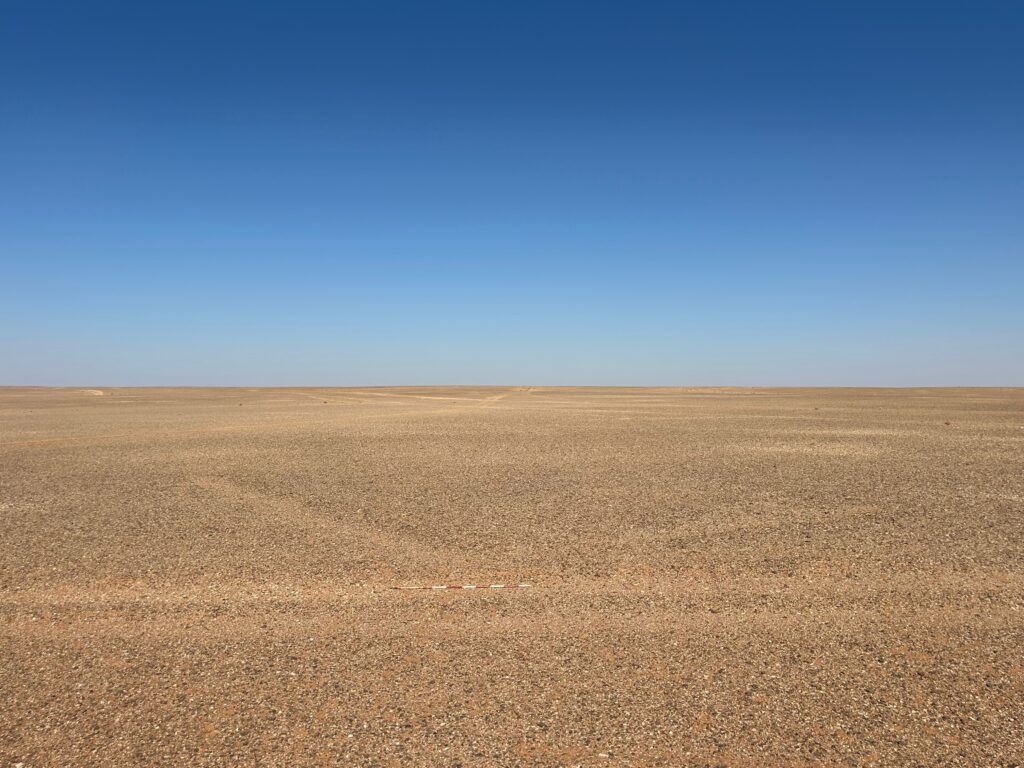
Figure 5: Ephemeral Landing Ground L ground marker on original Cairo-Baghdad air-mail route established by the Royal Air Force, ca 1921 (photographer A.M.R. Wasse)
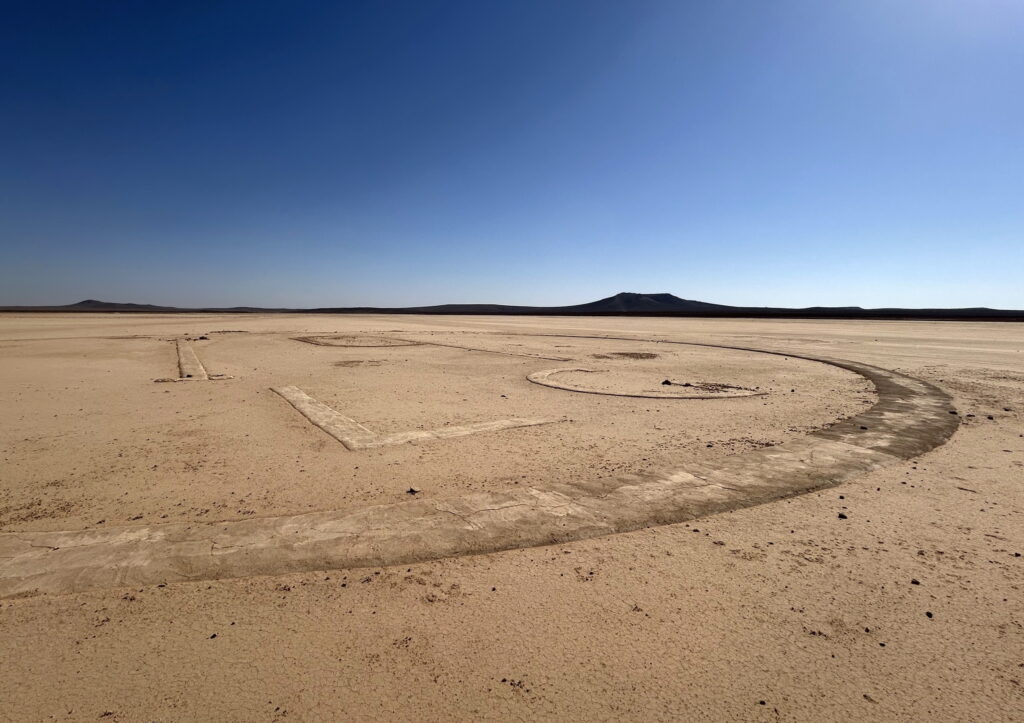
Figure 6: Landing Ground 19 marker on ‘great-circle’ Gaza-Rutbah air route, ca 1932 (photographer A.M.R. Wasse)
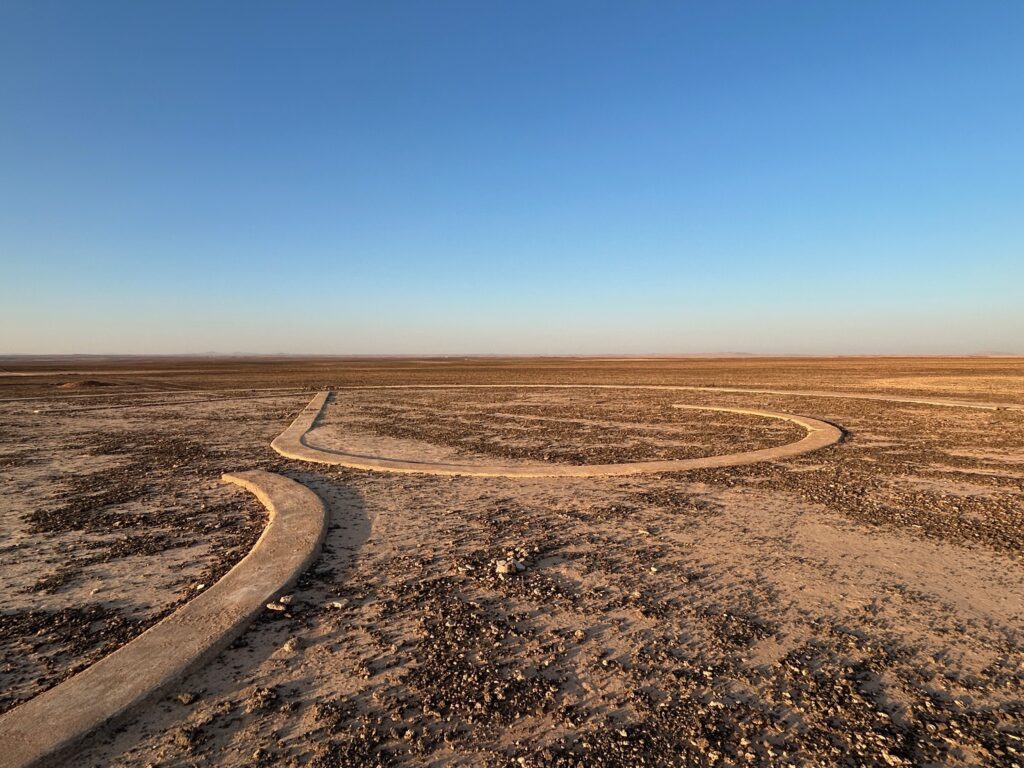
Figure 7: Landing Ground 23 marker on ‘great-circle’ Gaza-Rutbah air route, ca 1932; note cement construction (photographer A.M.R. Wasse)
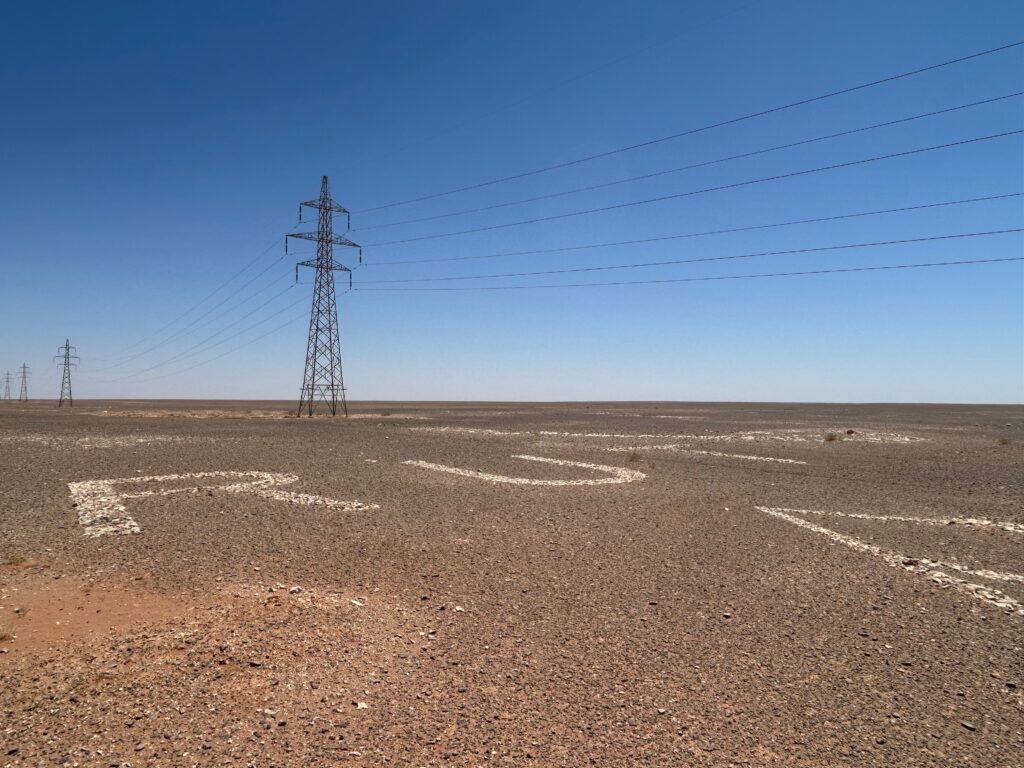
Figure 8: Double-headed AMM-RUT arrow on ‘great-circle’ Gaza-Rutbah air route, ca 1932 (photographer A.M.R. Wasse)
Bibliography
Armstrong, W. 1952. Pioneer Pilot. Blandford Press: London.
Hill, R. 1929. The Baghdad Air Mail. Edward Arnold & Co: London.
Leary, W.M. 1985. Aerial Pioneers: The U.S. Air Mail Service, 1918-1927. Smithsonian Institution Press: Washington DC.
Lehrer, H.R. 2014. Flying the Beam. Navigating the Early US Airmail Airways, 1917-1941. Purdue University Press: West Lafayette.
Library of Congress. n.d. Air views of Palestine (online). Available: https://www.loc.gov/pictures/item/2019696359/ (accessed 16 October 2025).
Stanley-Price, N. 2012. Imperial Outpost in the Gulf. The Airfield at Sharjah (UAE) 1932-1952. Book Guild Publishing: Brighton.
